
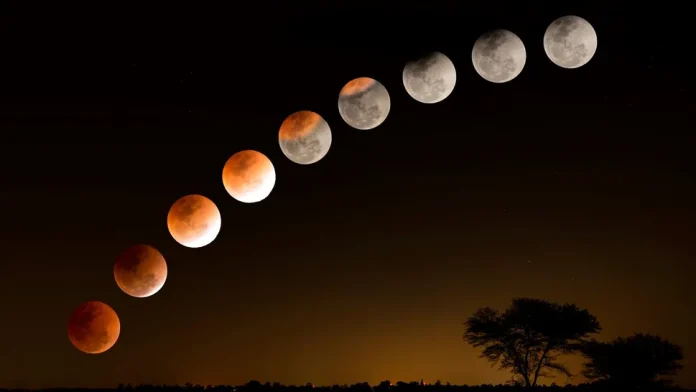
Total Lunar Eclipse to Transform the Moon into a Blood-Red Spectacle for Nearly an Hour
A breathtaking total lunar eclipse is taking place today, turning the Moon into a stunning “Blood Moon” — a rare cosmic event that will captivate skywatchers across large parts of the globe.
🌕 What’s Happening
During a total lunar eclipse, the Earth moves directly between the Sun and the Moon, blocking direct sunlight. Instead of fading to black, the Moon takes on dramatic shades of red and orange. This happens because Earth’s atmosphere scatters shorter blue wavelengths of sunlight while allowing longer red wavelengths to pass through and light up the lunar surface — the same phenomenon that makes sunsets appear red.
Astronomers say that the total phase of this eclipse — when the Moon is completely inside Earth’s shadow and appears blood-red — will last for about 58 minutes.
🌍 Where You Can See It
This extraordinary celestial display is visible in many regions:
-
Eastern Asia and Australia: Best views in the evening sky.
-
Pacific regions: Visible overnight.
-
North & Central America: Visible in the early morning hours as the Moon sets.
-
Europe, Africa, Middle East: Parts of the eclipse may be visible as the Moon rises.
In Pakistan and neighboring South Asian regions, daylight hours mean only portions of the eclipse may be observable — mainly toward the evening as the Moon rises already in partial eclipse.
📅 Eclipse Timeline (Approximate)
According to astronomical data, the key phases include:
-
Penumbral phase: Begins first as the Moon enters Earth’s outer shadow.
-
Partial eclipse: Earth’s umbra starts covering the Moon.
-
Totality: Around 58 minutes of full eclipse with the Moon glowing red.
Exact visibility and timing depend on your location and local weather conditions, so clear skies will enhance your viewing experience.
📸 Best Viewing Tips
-
No special equipment is needed — this eclipse is easily visible to the naked eye.
-
Using binoculars or a telescope can bring additional detail and depth to the sighting.
-
Find a spot with minimal light pollution and an unobstructed horizon for optimal viewing.
🪐 Why It Matters
This total lunar eclipse is one of the most significant astronomical events of the year because it won’t happen again until 2028–2029. That makes tonight’s Blood Moon a unique opportunity for both astronomy enthusiasts and casual observers alike.


Leave a Reply