

Imran Abbas criticizes ‘Dhurandhar’, raising concerns about the ethics of ‘divisive cinema’
Actor Imran Abbas contributed to the ongoing discussion by posting a message on Instagram that criticized filmmakers for, as he put it, turning cinema into “a vehicle of hatred, hostility and division.”
Abbas clarified that his concerns were not based on nationalism or the rivalry between India and Pakistan, but rather on what he viewed as the perilous misuse of art itself. He asserted that cinema should uplift the human spirit rather than incite prejudice or create division.
In a series of statements, the actor highlighted that art is intended to foster empathy and understanding. “Cinema should create connections, not celebrate prejudice,” he remarked, noting that while hatred disguised as art might yield profits and applause in the short term, it ultimately inflicts enduring emotional and social harm.

Abbas, who has experience in Bollywood productions, emphasized the significant impact of storytelling, pointing out that narratives portrayed on screen gradually infiltrate society’s collective consciousness. For this reason, he contended that artists have an ethical obligation that transcends mere box office success.
Previously, Abbas had shared similar sentiments on Facebook, where his tone was more pointed. He condemned Pakistanis who viewed and praised the film, labeling their reaction as “deeply shameful.”
He argued that if Pakistan were to create a similar film aimed at India, it would likely provoke widespread outrage within Indian society – a response he deemed both understandable and justified.
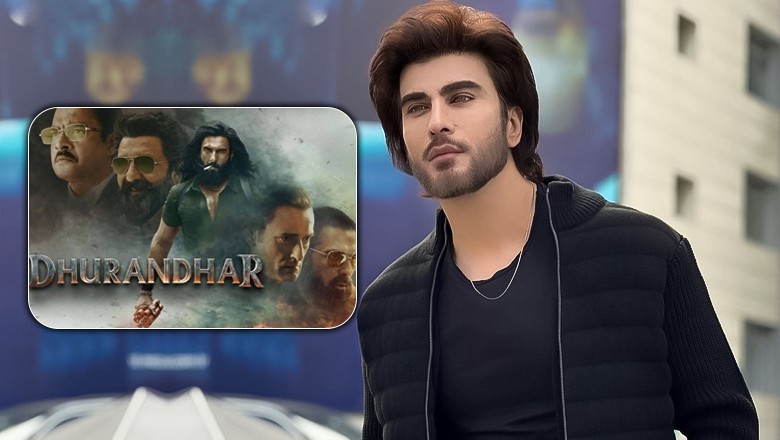
Dhurandhar, he stated, metaphorically “slaps us in the face and calls it entertainment,” and celebrating such content should not be confused with open-mindedness. Instead, he described it as a loss of dignity, self-respect, and moral clarity.
Abbas’s remarks have struck a chord with many who feel that artists and filmmakers have a responsibility to make a positive impact on society. Many agree with him, recalling a not-so-distant era when Indians and Pakistanis bonded over shared music, films, and cultural practices, discovering commonalities despite political strife.
However, the larger issue goes beyond just one film. Critics highlight what they see as the growing radicalisation and politicisation within certain segments of India’s media and entertainment sector.
In this context, vilifying entire communities — including millions of Pakistanis and India’s own Muslim population — has become commonplace and is even celebrated under the guise of nationalism. Historical events are selectively reinterpreted, fictional stories are presented as truth, and disclaimers like “inspired by true events” are employed to add legitimacy to divisive narratives.
For many observers, Dhurandhar represents not just an isolated incident but a sign of a disturbing trend — one where cinema, which once served as a bridge between cultures, risks transforming into a mechanism that fosters fear, animosity, and misinformation.
In the meantime, the Sindh government has announced the premiere of a new film, ‘Mera Lyari’, as a response to the Indian film Dhurandhar.
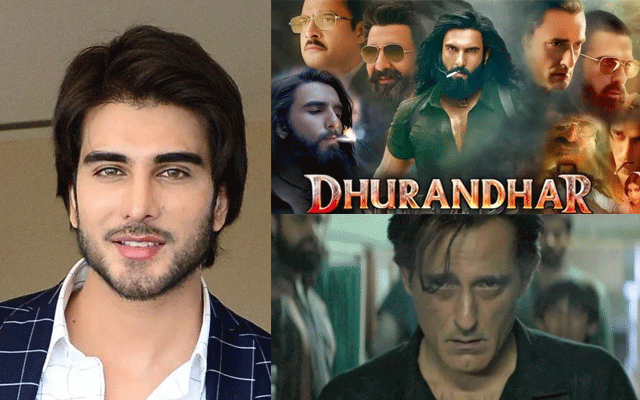
Senior Provincial Minister for Information Sharjeel Inam Memon stated that the Bollywood film is part of a larger conspiracy against Pakistan, specifically targeting Lyari. “Lyari is not about violence — it embodies culture, peace, talent, and resilience. Next month, ‘Mera Lyari’ will debut, showcasing the true essence of Lyari: peace, prosperity, and pride,” he shared in a post on the social media platform X.
Memon stressed that Dhurandhar aims to distort the image of Lyari, which he described as a beacon of cultural wealth and social unity. He further noted that the forthcoming Sindhi-language film intends to portray the city’s reality to both local and global audiences.
Previously, a constitutional petition was submitted to a Karachi court against Dhurandhar for the unauthorized use of images of the late Benazir Bhutto, the flag of the Pakistan Peoples Party (PPP), and footage from party rallies in its trailer. The petition further claims that the film depicts the PPP as being supportive of terrorists.
The petition was lodged by PPP activist Muhammad Amir in the District and Sessions Court (South) in Karachi. It requests a First Information Report (FIR) against the film’s director, producers, actors, and other relevant personnel involved in the creation and promotion of the movie.
The petition identifies director Aditya Dhar, producers Lokesh Dhar and Jyoti Kishore Deshpande, and actors Ranveer Singh, Sanjay Dutt, Akshaye Khanna, Arjun Rampal, R Madhavan, Sara Arjun, and Rakesh Beni. It also mentions cinematographer Vikash Nolcha, editor Shiv Kumar V Panicker, and other unnamed crew members as potential accused.
As stated in the petition, the official trailer features images of the late former prime minister and visuals of the PPP without obtaining legal permission. It asserts that the film portrays the PPP as sympathetic to terrorists and describes Karachi’s Lyari area as a “terrorist war zone,” which the petitioner contends is defamatory, misleading, and damaging to Pakistan’s reputation.
Dhurandhar has faced significant backlash since its release due to its depiction of Karachi’s Lyari as a war zone. The Indian film stars Ranveer Singh as a RAW agent, while Arjun Rampal portrays a Pakistani intelligence officer.












Leave a Reply