
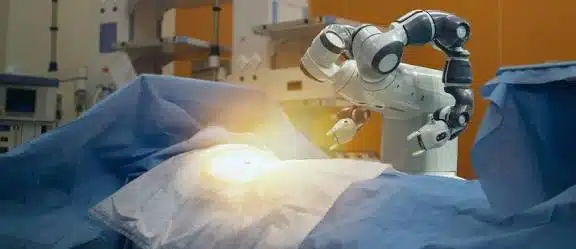
Are AI Systems Taking Over Medical Roles? Chinese Scientists Create a Robot Capable of Performing Highly Accurate Eye Injections
Chinese researchers have created a new autonomous robotic system capable of executing highly precise eye injections, which could significantly enhance the treatment of retinal diseases.
The technology was developed by the Institute of Automation at the Chinese Academy of Sciences and is intended to aid in delicate eye procedures that demand extreme accuracy.
During trials on animals, the robotic system achieved a flawless success rate. It effectively performed intricate procedures such as subretinal injections and injections into minuscule blood vessels within the eye. These tasks are typically very challenging for human surgeons, as even minor hand movements can lead to severe damage.
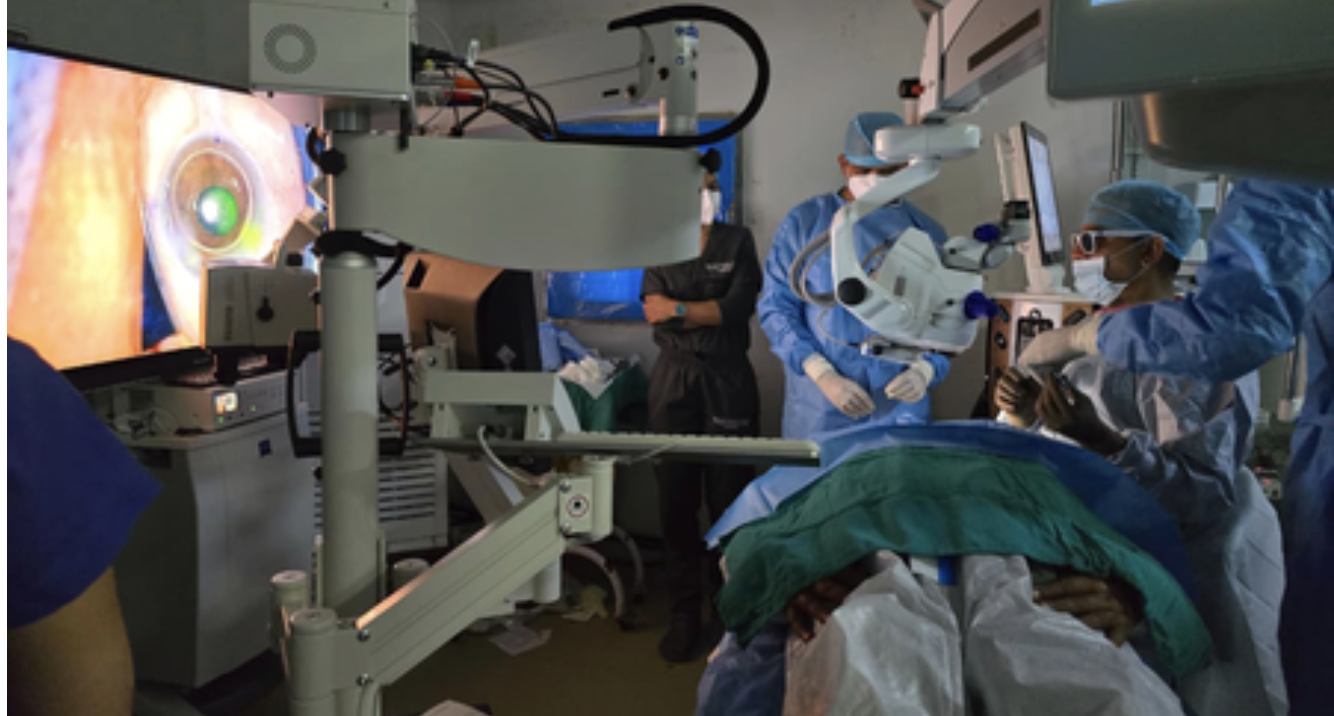
The robot employs sophisticated 3D spatial sensing to comprehend the precise structure of the eye. It meticulously plans and regulates the injection trajectory, placing the needle with exceptional precision. Researchers indicate that this system can decrease surgical errors by as much as 80 percent compared to conventional manual eye injections.
One of the primary benefits of this technology is enhanced patient safety. The robot can administer injections in a more stable and consistent manner, minimizing the risk of errors caused by hand movements or fatigue. It also has the potential to reduce the training time needed for surgeons, as the system can manage many of the most challenging steps.
In the future, this robotic technology could facilitate advanced eye treatments, making them more accessible. It may enable complex eye surgeries to be conducted in remote or underserved regions where skilled specialists are not present.
Chinese researchers from the Institute of Automation at the Chinese Academy of Sciences (CAS) have created an autonomous robot that can perform ultra-precise eye injections, aimed at enhancing treatment for retinal diseases. The system recorded a 100% success rate in animal trials, significantly decreasing positioning errors by almost 80% when compared to manual methods. Employing 3D spatial perception and sophisticated algorithms, it improves accuracy for intricate, micro-level procedures.
Key Features of the Robotic System:
Capabilities: The robot is capable of executing subretinal and intravascular injections, which demand extreme precision at the micrometer level.
Performance: In both laboratory and animal studies, the system minimized human error and enhanced accuracy by 80% compared to manual techniques and 55% relative to surgeon-operated robots.
Technology: It utilizes cutting-edge 3D spatial perception, intelligent trajectory control, and precise positioning algorithms to maneuver through the tiny, delicate structures of the eye. Impact: This technology is intended to make eye surgeries safer, more reliable, and more accessible, potentially aiding in remote regions where specialists are scarce.
Although this technology represents a significant leap in accuracy, it is designed to augment surgical precision and assist surgeons rather than completely replace human expertise in the foreseeable future. The results were published in the journal Science Robotics.


Leave a Reply